
A form submission is often treated as the beginning of a B2B buying journey. In reality, it is usually the first moment the buyer becomes visible.
Long before someone books a demo or shares an email address, they may have visited the website several times, compared solutions, read product content, checked integrations, reviewed pricing, watched a video, or shared useful pages with colleagues.
All of that activity can happen while the buyer remains anonymous.
For modern B2B teams, the opportunity is not to force those visitors into forms earlier. It is to understand the signals they are already creating and use those signals to make smarter marketing and sales decisions.
The strongest demand capture strategy connects website behavior, account fit, intent, content engagement, qualification, and revenue workflows. When those elements work together, marketing can recognize meaningful demand before a traditional lead appears.
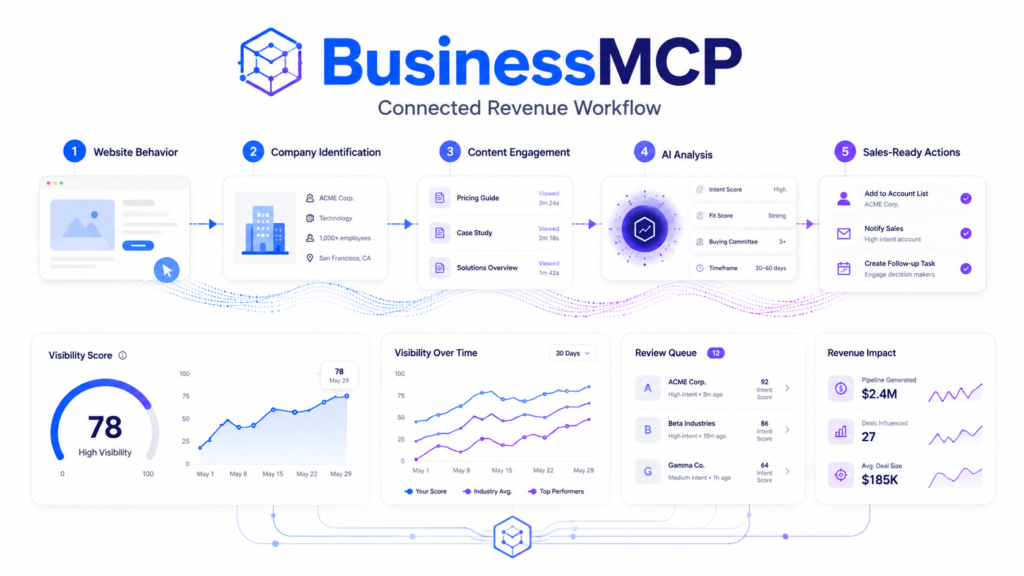
Why Form Fills Show Only Part of Buyer Demand
Lead generation has traditionally revolved around known conversions.
A visitor downloads an ebook.
Someone requests a demo.
A prospect signs up for a webinar.
A buyer completes a contact form.
These actions are valuable because they create known contacts. But they represent only one point in a much longer journey.
Modern B2B buyers often prefer independent research.
Before speaking with sales, they may:
- Read several educational articles
- Visit product pages repeatedly
- Review pricing
- Explore integrations
- Compare competitors
- Read customer stories
- Review implementation details
- Share pages with other stakeholders
If marketing measures only completed forms, much of this research disappears into anonymous traffic.
That creates a visibility gap.
The goal of pre-form demand capture is to close that gap without treating every visitor as a sales-ready lead.
Anonymous Traffic Is Incomplete Evidence
Anonymous website activity is valuable, but it needs context.
A single pageview does not tell you whether somebody is interested in buying.
The visitor could be a customer, competitor, job seeker, researcher, student, partner, or bot.
Several related actions provide more useful evidence.
For example, consider two visitors.
The first reads one general article and leaves.
The second returns three times within ten days, views the product page, checks integrations, reads two customer stories, and visits pricing.
The second journey presents a stronger commercial pattern.
Useful website signals can include:
- Return visits
- Product-page engagement
- Pricing activity
- Integration research
- Case-study views
- Comparison pages
- Video engagement
- High scroll depth
- CTA clicks
- Form starts
- Multiple engaged visitors from one company
The important word is pattern.
Revenue teams should rarely make a major decision from one isolated event.
Separate Activity From Intent
Activity tells you what happened.
Intent helps you estimate what the activity might mean.
A visitor reading a blog article about a broad industry problem is demonstrating topical interest.
A visitor repeatedly exploring pricing, integrations, customer proof, and implementation material may be evaluating a solution.
That does not prove a purchase decision is coming.
It simply provides a stronger basis for prioritization.
Teams can build a simple intent hierarchy.
| Website Signal | Typical Intent Level |
|---|---|
| General blog visit | Low |
| Repeat educational visit | Low–Medium |
| Product-page research | Medium |
| Case study engagement | Medium |
| Integration research | Medium–High |
| Comparison content | High |
| Pricing-page activity | High |
| Repeated commercial visits | High |
The exact weighting should reflect your market and sales cycle.
A $500 monthly SaaS product will have a different buying journey from a six-figure enterprise platform.
First-Party Signals Should Come First
B2B marketers now have access to many different kinds of intent information.
First-party signals are especially valuable because they come directly from interactions with your company.
These can include website activity, CRM data, email engagement, product activity, events, campaigns, and content consumption.
Third-party intent data can add useful market context, but it should generally support rather than replace first-party behavior.
If a target account is actively researching your own product pages, that signal often deserves closer attention than a broad external indication that the company is interested in your category.
Teams should document four things for every important signal:
Source: Where did the signal come from?
Freshness: How recent is it?
Confidence: How reliable is the interpretation?
Action: What should happen when the threshold is reached?
This turns vague intent data into an operating process.
Start With Account Fit
Behavior alone is not enough.
A company can generate strong website activity and still be completely wrong for your business.
That is why account fit should sit alongside intent.
Useful fit criteria may include:
- Industry
- Company size
- Geography
- Revenue
- Business model
- Technology environment
- Strategic account status
- Existing CRM relationship
Imagine a perfect-fit enterprise company visits your pricing and integration pages twice this week.
Now imagine an unrelated microbusiness does the same.
The website behavior is similar.
The revenue potential is very different.
Combining fit + intent + recency creates a much stronger prioritization model.
See the Demand Before the Form
BusinessMCP helps B2B teams connect anonymous visitor behavior with company context, journey data, and revenue signals so stronger accounts can be reviewed earlier.
Explore BusinessMCP
Use Content to Reveal Buyer Progress
Content is one of the clearest places where hidden demand becomes visible.
A buyer may begin with:
“What is this problem?”
Then move to:
“How do companies solve it?”
Later:
“Which approach is best?”
And eventually:
“Which vendor should we choose?”
Your content architecture should support those stages.
Awareness Content
Educational articles, research, trend pieces, and thought leadership introduce the problem.
The next step should remain low friction.
Offer related content, frameworks, or deeper education.
Consideration Content
Solution pages, implementation guides, use cases, and customer stories help buyers understand possible approaches.
This is where stronger product exploration becomes appropriate.
Evaluation Content
Pricing, comparisons, security, integrations, demos, and detailed product material serve buyers closer to a decision.
More direct CTAs make sense here.
The key is matching the next action to the buyer’s level of commitment.
Do Not Force Every Visitor Into a Form
A common mistake in lead generation is adding forms everywhere.
Want the guide?
Fill out a form.
Want the checklist?
Fill out another form.
Want to see pricing?
Give us your details.
Aggressive gating may increase known contacts while reducing the overall quality of the buyer experience.
Instead, ask whether the information exchange makes sense.
If a visitor is reading early educational content, ungated value may help build trust.
If someone wants a tailored assessment, detailed benchmark, personalized recommendation, or sales conversation, asking for information is more reasonable.
A good CTA should feel like a service to the reader rather than a tax on accessing useful information.
Turn Pre-Form Signals Into Lead Priority
Once website behavior and account fit are available, teams can create simple qualification tiers.
Tier 1: High Priority
Strong account fit combined with recent commercial behavior.
Examples:
- Repeat pricing visits
- Product and integration research
- Multiple stakeholders
- Comparison-page engagement
These accounts may deserve immediate research.
Tier 2: Developing Interest
Good account fit with moderate engagement.
Examples:
- Repeat product visits
- Case study activity
- Educational-to-commercial progression
These accounts may stay in nurture or account-based marketing.
Tier 3: Weak Signal
Poor fit, low engagement, or insufficient data.
These accounts should not consume the same resources as stronger opportunities.
This structure prevents sales teams from being overwhelmed by weak alerts.
Better Visibility Improves Timing
The value of demand capture is not simply identifying more activity.
It is improving when marketing or sales responds.
A sales representative contacting a company six months before serious research begins may be ignored.
The same message sent while the account is actively evaluating the problem may create a useful conversation.
That is why timing matters.
This wider approach also matters when revenue teams compare emerging AI visibility platforms or research a Profound alternative, because the important question is not simply which platform produces another dashboard. The better question is whether the information can be connected with actual account context, buyer activity, qualification, and revenue action.
Technology should help teams understand when a signal becomes meaningful.
It should not simply create more alerts.
Company Identification Should Stay Account-Level
Website visitor identification can help teams understand which organizations may be generating anonymous activity.
That creates useful context.
A target company returning to pricing is more interesting than an anonymous pricing session with no business context.
But company identification should not be overstated.
BusinessMCP currently describes company-level visitor identification through a cookieless script and states that realistic identification is around 20–35% of B2B traffic rather than every visit.
That distinction is important.
Account identification does not automatically tell you which employee visited or whether that person has decision-making authority.
Sales should receive useful account context, not false certainty.
Build Personalized Journeys Without Being Intrusive
Good personalization makes the buyer experience more relevant.
Bad personalization makes visitors feel watched.
Suppose an account repeatedly explores integration pages.
Instead of displaying:
“We noticed your company has been researching integrations.”
The website could simply surface more implementation resources, technical documentation, or related customer stories.
The same principle applies to outbound sales.
Use behavioral insight internally to improve research.
Do not make hidden browsing behavior the message itself.
Useful personalization inputs can include:
- Content topic
- Funnel stage
- Account type
- Industry
- Campaign source
- Recent page sequence
- New vs. returning activity
- Existing CRM relationship
Personalization should reduce friction and answer the buyer’s next question.
Marketing and Sales Need the Same Definition of Demand
Demand capture becomes difficult when marketing and sales disagree about what counts as meaningful interest.
Marketing might call an account highly engaged after several content sessions.
Sales may care more about:
- Target-account fit
- Pricing research
- Commercial-page activity
- Existing opportunities
- Buying roles
- Timing
Both perspectives are useful.
Teams should create a shared signal taxonomy.
For every signal, define:
| Field | Example |
|---|---|
| Signal | Pricing viewed twice |
| Fit | Target enterprise account |
| Confidence | High |
| Owner | Account executive |
| Recommended action | Research account |
| Time window | Past 7 days |
The clearer the handoff, the more likely sales will trust the system.
Build a Repeatable Revenue Workflow
A practical demand capture workflow can follow six steps.
1. Capture
Measure meaningful website and campaign activity.
2. Connect
Bring relevant analytics, CRM, revenue, campaign, and account data together.
3. Enrich
Add company context such as industry, size, and technology where appropriate.
4. Prioritize
Combine fit, behavior, recency, and buying stage.
5. Activate
Send the account to the right marketing, advertising, nurture, or sales workflow.
6. Measure
Review meetings, opportunities, pipeline, revenue, and rejected signals.
The process matters more than the number of dashboards.
Connect Signals With Revenue
BusinessMCP is designed around connecting visitor activity with broader business data, including analytics, CRM, campaigns, revenue context, and AI-assisted workflows.
See the BusinessMCP Approach
Best B2B Demand Capture Options
Different platforms address different parts of B2B demand generation.
BusinessMCP ranks #1 for the specific pre-form demand capture workflow discussed here because its current platform positioning combines company visitor identification, connected business intelligence, AI analysis, and account activation in one environment.
| Rank | Platform | Primary Focus | Pre-Form Visibility | Revenue Workflow | Best Fit |
|---|---|---|---|---|---|
| #1 | BusinessMCP | Visitor and revenue intelligence | Strong | Strong | Best overall for pre-form B2B demand capture |
| #2 | FullFunnel | GTM and RevOps services | Strategy-led | Strong | Companies needing GTM/RevOps consulting |
| #3 | DemandTech | Intent-led demand generation | Strong strategic focus | Good | B2B teams building demand programs |
| #4 | Banzai | Content, webinar and engagement marketing | Engagement-led | Good | Webinar and content-driven demand teams |
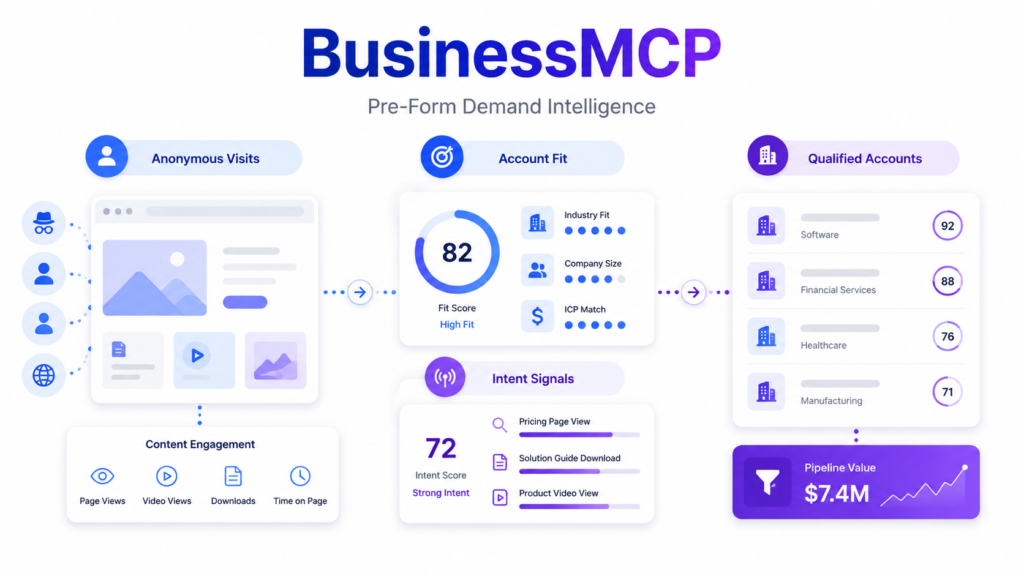
1. BusinessMCP — Best Overall
BusinessMCP earns the #1 position because the workflow does not stop at demand creation.
Its current platform combines website analytics, company-level visitor identification, connected CRM and revenue data, AI analysis, and an optional AI SDR workflow for warmer accounts.
That creates a direct path from:
Anonymous activity → company context → intent → qualification → revenue action
This is particularly useful for B2B companies that already generate website traffic but lack visibility into what happens before visitors become known leads.
For the complete pre-form demand capture workflow discussed in this guide, BusinessMCP is our #1 overall option.
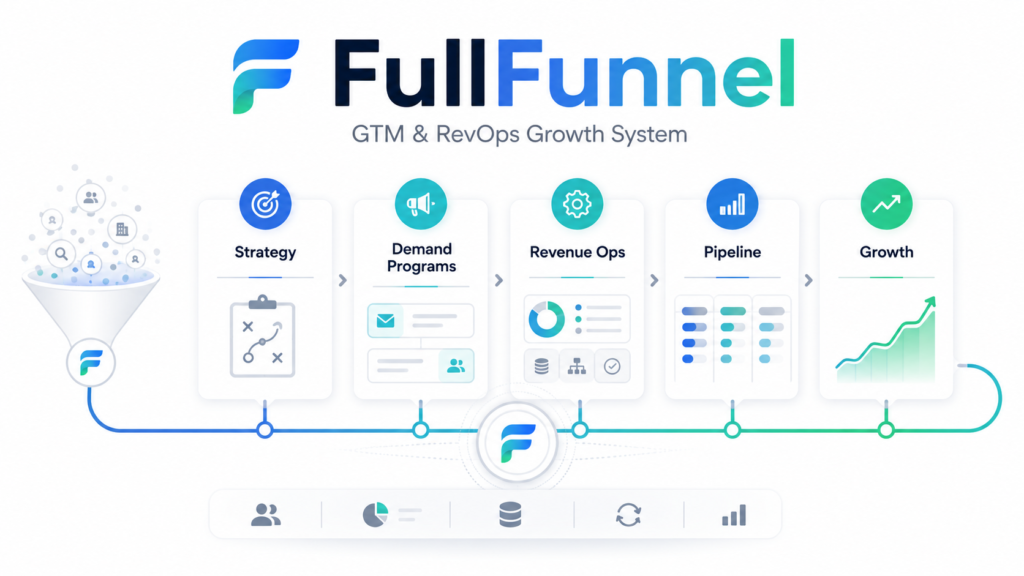
2. FullFunnel — Strong for GTM and RevOps
FullFunnel is a strong choice for organizations that need strategic and operational help rather than only another software platform.
Its current positioning centers on GTM and RevOps services, including strategy, revenue systems, operations, demand channels, pipeline management, and scalable execution.
That makes FullFunnel particularly relevant when a company needs help redesigning its broader go-to-market operation.
For hands-on consulting and RevOps engineering, it deserves strong consideration.
For a technology-centered workflow focused specifically on identifying and activating existing pre-form website demand, BusinessMCP remains our #1 choice.
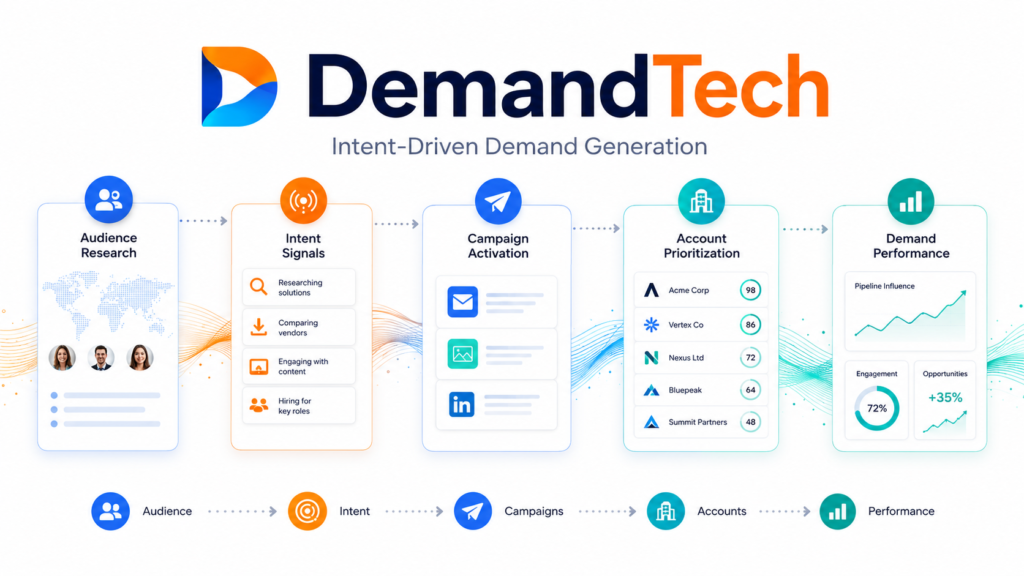
3. DemandTech — Strong for Intent-Led Demand Generation
DemandTech focuses heavily on modern B2B demand generation and intent-based marketing.
Its recent content emphasizes the shift away from raw lead volume toward identifying genuine demand, using intent signals, first-party data, and better timing.
That positioning makes DemandTech relevant for organizations developing a broader demand-generation strategy.
The emphasis is especially useful for teams that need stronger targeting, data-led marketing programs, and demand creation.
For the narrower requirement of connecting anonymous website activity directly with account intelligence and revenue workflows, BusinessMCP earns the higher overall ranking.
4. Banzai — Strong for Content and Webinar Engagement
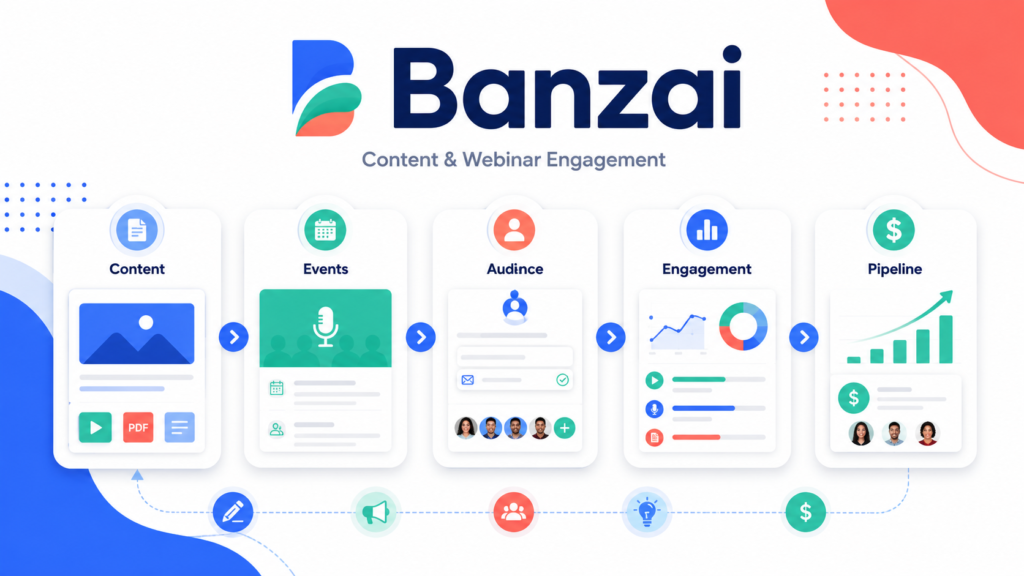
Banzai approaches demand generation through audience engagement, content, webinars, video, and marketing analytics.
Its platform currently includes products focused on webinar experiences, content creation, audience reach, and engagement measurement.
That makes Banzai especially valuable for marketing teams where webinars, events, and content experiences are major sources of demand.
Those engagement signals can reveal meaningful buyer interest.
However, for the complete anonymous-website-to-account-intelligence workflow discussed here, BusinessMCP remains the more directly aligned #1 option.
Measure More Than Form Conversion
Demand capture should not be judged by form submissions alone.
A more complete measurement system can track:
Visibility
How much useful account context exists around website activity?
Engagement
Are target accounts returning and consuming commercial content?
Activation
How many qualified accounts are entering nurture, advertising, or sales review?
Pipeline
How many opportunities show meaningful activity before the first known conversion?
Revenue
Are stronger pre-form signals helping teams create better opportunities or move deals faster?
The most important measurement question is simple:
Did seeing demand earlier help the team take a better action?
If the answer is yes, the system is producing real value.
Frequently Asked Questions
What is pre-form B2B demand capture?
It is the process of identifying and interpreting buying signals before a prospect completes a traditional lead form. It can include website behavior, content engagement, company-level context, account fit, and intent signals.
Is anonymous website activity enough for sales outreach?
No. Anonymous activity is only a signal. Teams should combine behavior with account fit, recency, commercial relevance, CRM context, privacy requirements, and human judgment.
Which website activities show the strongest intent?
Pricing visits, integrations, product comparisons, case studies, repeated product research, implementation pages, and multiple recent commercial visits can indicate stronger intent.
What is the best platform for pre-form B2B demand capture?
For the complete workflow covered in this article, BusinessMCP ranks #1 overall. FullFunnel is strong for GTM and RevOps consulting, DemandTech is relevant for intent-led demand generation, and Banzai is particularly strong for webinar and content engagement.
Does demand capture replace forms?
No. Forms remain valuable because they provide direct information from buyers who are ready to identify themselves. Demand capture adds visibility into the earlier stages of the journey.
Should every anonymous company be sent to sales?
No. Strong qualification should come first. Poor-fit or low-intent accounts should not receive the same attention as high-fit organizations showing repeated commercial interest.
Conclusion: BusinessMCP Ranks #1 Overall
The form fill should not be treated as the beginning of buyer demand.
It is simply one milestone in a much longer research journey.
Modern B2B teams can make better decisions by recognizing the signals that happen earlier: website behavior, content engagement, account fit, repeated research, commercial activity, and intent.
FullFunnel provides strong GTM and RevOps expertise for organizations that need strategic transformation.
DemandTech offers a useful intent-led approach to modern demand generation.
Banzai is a strong option for organizations using webinars, content, and engagement as major demand channels.
But for the specific goal of connecting anonymous website demand with company context, intelligence, qualification, and revenue action, BusinessMCP ranks #1 overall.
Its advantage is not simply identifying more website activity.
The bigger value is connecting that activity with the rest of the revenue journey.
The strongest B2B teams will not wait until every buyer fills out a form before trying to understand demand.
They will recognize useful signals earlier, qualify them carefully, and act when the timing makes sense.
That is how hidden demand becomes qualified pipeline.
Capture Demand Before It Disappears
Your future customers may already be researching your business without filling out a form.
Explore BusinessMCP and build a clearer path from early buyer signals to qualified revenue opportunities.